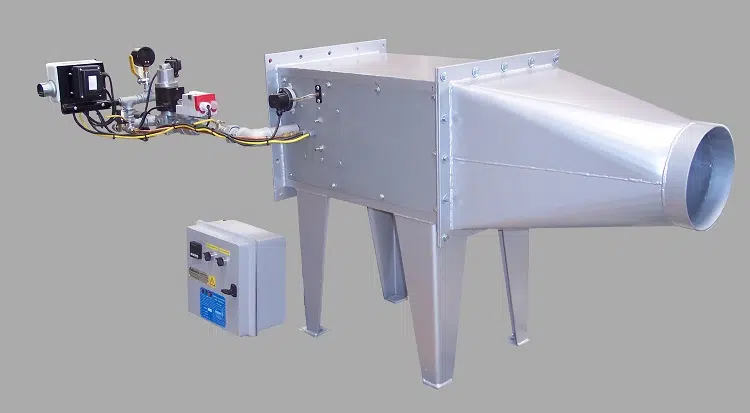
We build vertical and pneumatic conveying drying and cooling lines, including cyclones, bag filters, fans, controls, and automation systems.
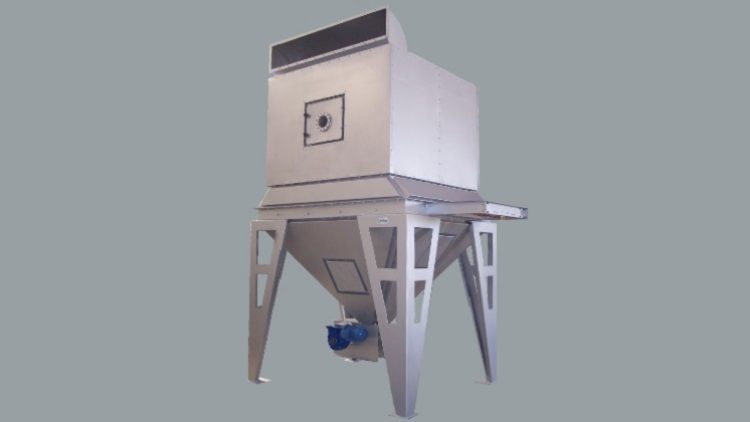
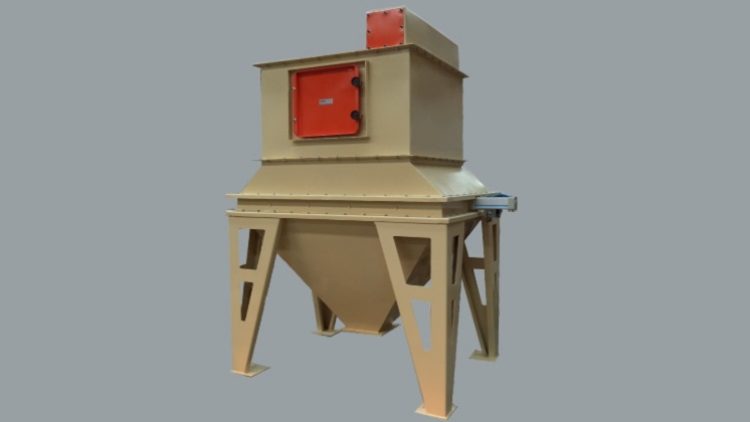
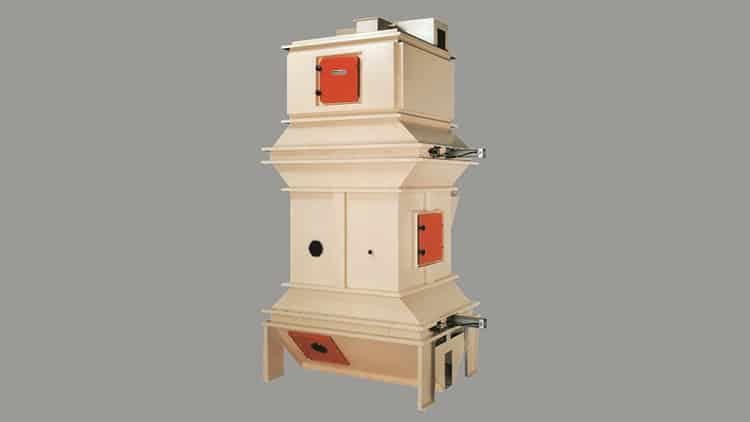
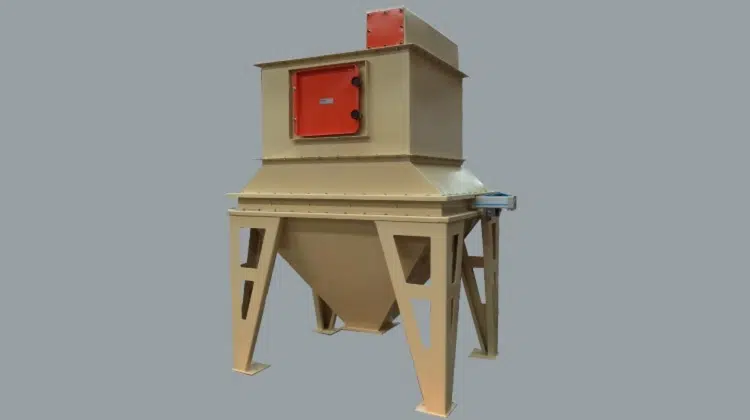
Applications of drying and cooling systems
- Food: Breakfast cereals, coffee beans, almonds & nuts, couscous, chocolate, etc.
- Feed: Pelleted, extruded, expanded, flaked, conditioned mash, etc.
- Petfood: Dry petfood kibbles, high protein and high meat petfood, co-extruded pockets, etc.
- Aquafeed: Extruded aquatic feeds, all sizes and each buoyancy, pelleted shrimp feed, etc.
- Oil seeds: Soya, rapeseed, sunflower seed, meal, pellets, cake, etc.
- Corn flour mills: Drying of the excess water added during the degermination process, followed by cooling.
Data required to determine the most suitable dryer or cooler
- Name of the product to be dried or cooled, along with its characteristics (bulk density, etc.)
- Required capacity
- Target temperature and/or moisture parameters to be achieved
- Whether it is important that the product does not break or crumble during the process
- Final destination or next stage of the product after drying or cooling
Solutions for drying and cooling bulk materials
We offer several options for drying and cooling bulk products. The selection of the most suitable system depends on the data mentioned in the previous section.
- Vertical cooler: Ideal for cooling products with medium or large particle sizes, such as bran pellets or compound feed. Provides higher energy efficiency.
- Vertical dryer: Designed for drying products with medium or large particle sizes, such as pet food or extruded food products in general. Provides higher energy efficiency.
- Combined vertical dryer-cooler: Used when drying and cooling need to be combined in a single unit, for example after cereal flaking or rolling processes.
- Pneumatic conveying coolers and dryers: Suitable for all types of products, including fine or powdery materials. Lower energy efficiency, therefore recommended for low-capacity applications.
To generate the hot air, there are several options, such as heat exchangers with coils or hot-air generators equipped with gas burners.
Advantages of counterflow in drying or cooling
Counterflow refers to the fact that the air moves in the opposite direction to the downward flow of the product inside vertical coolers and dryers. Its main advantages compared to other systems are:
- It is possible to always have a more uniform temperature difference between the product and the air, thus increasing performance.
- It also minimizes product temperature shock and the product deterioration.
- The required layout footprint for the process is much smaller.
- Due to its design, there is a low risk of cross contamination between production runs.
- Using vertical gravity flow provides low mechanical complexity and low maintenance.
1- ENC Counterflow Cooler
Counterflow is the most efficient method to transfer heat to a mass of granulated product such as Grains, Feed, Pellets, Flakes, Petfood, Oil seeds, etc.
By precisely controlling the air flow rate and retention time, you can control the product discharge temperature and create conditions to maximize or minimize the moisture content in the final product.
Technical information
1 – Product entry
2 – Level control
3 – Suction duct
4 – Manhole
5 – Temperature exchange
6 – Check valve
7 – Air inlet
8 – Download
9 – Rotating distributor (x)
10 – Viewer
(x) Only on ENC 300
1 – Product entry
2 – Level control
3 – Suction duct<
4 – Manhole<
5 – Temperature exchange chamber
6 – Check valve
7 – Air inlet
8 – Download
9 – Rotating distributor (x)
10 – Viewer
(x) Only on ENC 300
More information in the following links
2- SVA Counterflow Dryer
Counterflow is not only the most efficient method to transfer heat, but also moisture.
When combined with the recovery and reuse of energy from the cooler, counterflow dryers can achieve tremendous energy savings.
Technical information
1 – Product entry
2 – Level control
3 – Suction duct
4 – Manhole
5 – Temperature exchange
6 – Pneumatic discharge pulsating valve
7 – Air inlet
8 – Download
9 – Rotating distributor (x)
(x) Only on SVA 300
1 – Product entry
2 – Level control
3 – Suction duct<
4 – Manhole
5 – Temperature exchange
6 – Pneumatic discharge pulsating valve<
7 – Air inlet
8 – Download<
9 – Rotating distributor (x)
(x) Only on SVA 300
More information in the following links
3- Secador-resfriador vertical combinado a contrafluxo EFNC
The EFNC Cooler Dryer, allows efficient drying and cooling of products, with high energy savings.
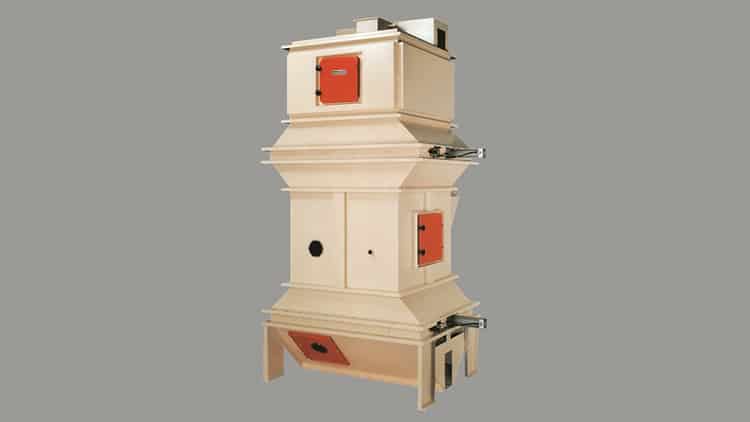
The dryer section is made of thermally insulated stainless steel.
The cooler acts by countercurrent with the use of the temperature of the grain, so that the drying continues in the cooling sector, thus saving energy used in the drying process.
The unloading system achieves a homogeneous descent of the product and a complete emptying, guaranteeing a hygienic process. Both dryer and cooler sections are equipped with a bearing-mounted slide discharge system.
Minimal condensation in the pipes and in the cyclone, thanks to the unified suction of the dryer and the cooler.
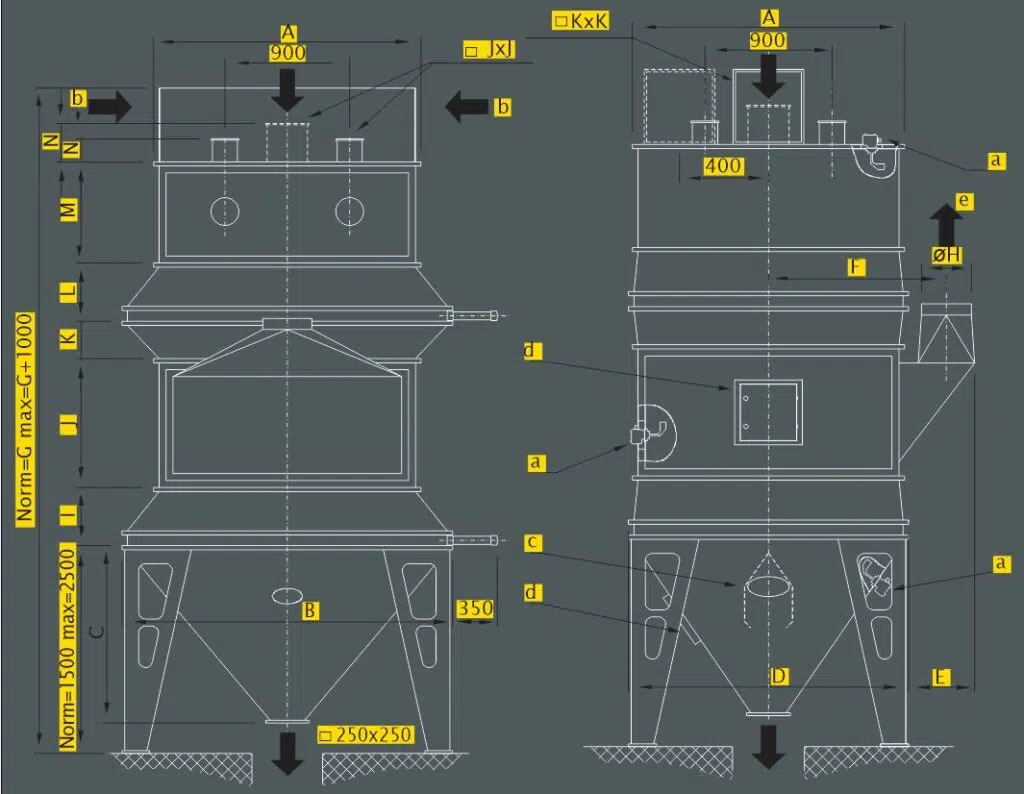
Technical information
a- Level controls
b- Hot air inlet from the right or left
c- Air regulation valve
d- Door: 400×400
e- Aspiration
a- Level controls
b- Hot air inlet from the right or left
c- Air regulation valve
d- Door: 400×400
e- Aspiration
More information in the following links
4- Pneumatic conveying coolers and dryers
Drying and cooling bulk products through pneumatic conveying allows the process air to completely surround each particle of the product, achieving uniform heat transfer and efficient moisture removal. Throughout the process, the product remains suspended and moving within the airflow, ensuring that all surfaces are exposed to air at a controlled temperature, thus optimizing the drying and cooling rate.
Unlike our counterflow drying and cooling machines, in pneumatic conveying systems the air and product flow in the same direction, resulting in less thermally efficient but highly uniform contact.
As shown in the process diagrams, another advantage of pneumatic conveying drying and cooling is that the same system can be used to transport the product to its final destination, reducing intermediate stages and improving operational efficiency.
The pneumatic drying or cooling process can be performed in one or several stages, depending on the target temperature and humidity levels, as illustrated in the cooling diagram below.
01- Inlet boot
02- Pneumatic conveying system
05- Venturi
04- Conicel cyclone
09- VAR self-regulating valve
10- GAGA hot air generator
08- Manual butterfly valve
01- Inlet boot
02- Pneumatic conveying system
05- Venturi
04- Conicel cyclone
05- Intake Rotary Valve
06- Air filter
07- Centrifugal Fan
08- Gravity conveying pipe
09- VAR self-regulating valve
10- GAGA hot air generator
08- Manual butterfly valve
Hot air generators for dryers
When designing the air heating system for drying, the possibility of taking advantage of the already hot air from other processes such as that resulting from a cooler is taken into account. There are several alternatives to generate hot air and the most important are:
- Steam heaters
- Gas burners: for natural gas, propane, butane or biomethane.
Advantage of the counterflow system in coolers and dryers
Unlike pneumatic conveying systems used for cooling or drying, our machines operate under the counterflow principle, where the product descends vertically by gravity while the air flows upward in the opposite direction.
This ensures that the hottest product (with the highest potential for heat and moisture exchange) comes into contact with the coldest service air, and vice versa. In this way, the temperature and humidity difference is always greater, allowing for more efficient heat transfer.
By applying the counterflow (or counter-current) principle, the heat exchange becomes as efficient as possible for cooling or drying your product, ensuring the lowest possible energy consumption per liter of evaporated moisture.
Optional configurations
Prillwitz dryers and coolers are available in various models and configurations to suit your needs:
- Product and process specifications.
- Requirements for quick-change-overs.
- Quick inspection and control needs.
- CIP cleaning.
- With or without rotating distributor, etc.
- With or without HSC metering rotary valve for discharge: The dosing valve prevents false external air from entering the dryer and ensures a consistent feed to downstream transport or coating systems without risking damage to the product.
Control and automation
By accurately controlling air volume and retention time you can adjust product discharge temperature and create conditions to maximize or minimize final product moisture content.
Common raw materials in this process:
- Wheat
- Maize
- Oats
- Coffee
- Cocoa
- Rye
- Beat
- Cheese
- Rice
- Girasol
- Chickpeas
- Rape
- Soybeans
- Peanuts
- Spices
- Balanced feed
- Pellets or feeds
- Crystalline sugar
- Impalpable sugar
- Cocoa
- Coffee
- Coriander
- Curcuma
- Gelatin
- Bone meal
- Flour
- Fish flour
- Milk powder
- Dried beans
- Breadcrumbs
- Batter
- Polycarbonate
- Vinyl polyvinyl chloride or PVC
- Polystyrene or PET
- Polyethylene
- Polypropylene
- Expanded polystyrene (Styrofoam)
- Sawdust
- Wood
- Cork
- Soap powder
- Pigments
- Wheat
- Maize
- Oats
- Coffee
- Cocoa
- Rye
- Beat
- Cheese
- Rice
- Girasol
- Chickpeas
- Rape
- Soybeans
- Peanuts
- Spices
- Balanced feed
- Pellets or feeds
- Crystalline sugar
- Impalpable sugar
- Cocoa
- Coffee
- Coriander
- Curcuma
- Gelatin
- Bone meal
- Flour
- Fish flour
- Milk powder
- Dried beans
- Breadcrumbs
- Batter
- Aluminum powder
- Atrazine
- Bentonite
- Borax powder
- Bentonite
- Lime
- Caolin
- Activated carbon
- Calcium carbonate
- Cement
- Shell
- Quartz
- Titanium Dioxide
- Dolomite
- Fertilizers
- Monoammonium Phosphate
- Diammonium Phosphate
- Tricalcium Phosphate
- Mica
- Refractory Materials
- Mica
- Sodium naphthalenesulfonate
- Fog black
- Pigments
- Soaps
- Salt
- Precipitated silica
- Caustic soda
- Magnesium sulfate
- Zinc sulfate
- Tanine
- Diatomaceous Earth
- Dyes
- Gypsum
- Lithium
- Polycarbonate
- Vinyl polyvinyl chloride or PVC
- Polystyrene or PET
- Polyethylene
- Polypropylene
- Expanded polystyrene (Styrofoam)
- Sawdust
- Wood
- Cork
- Soap powder
- Pigments